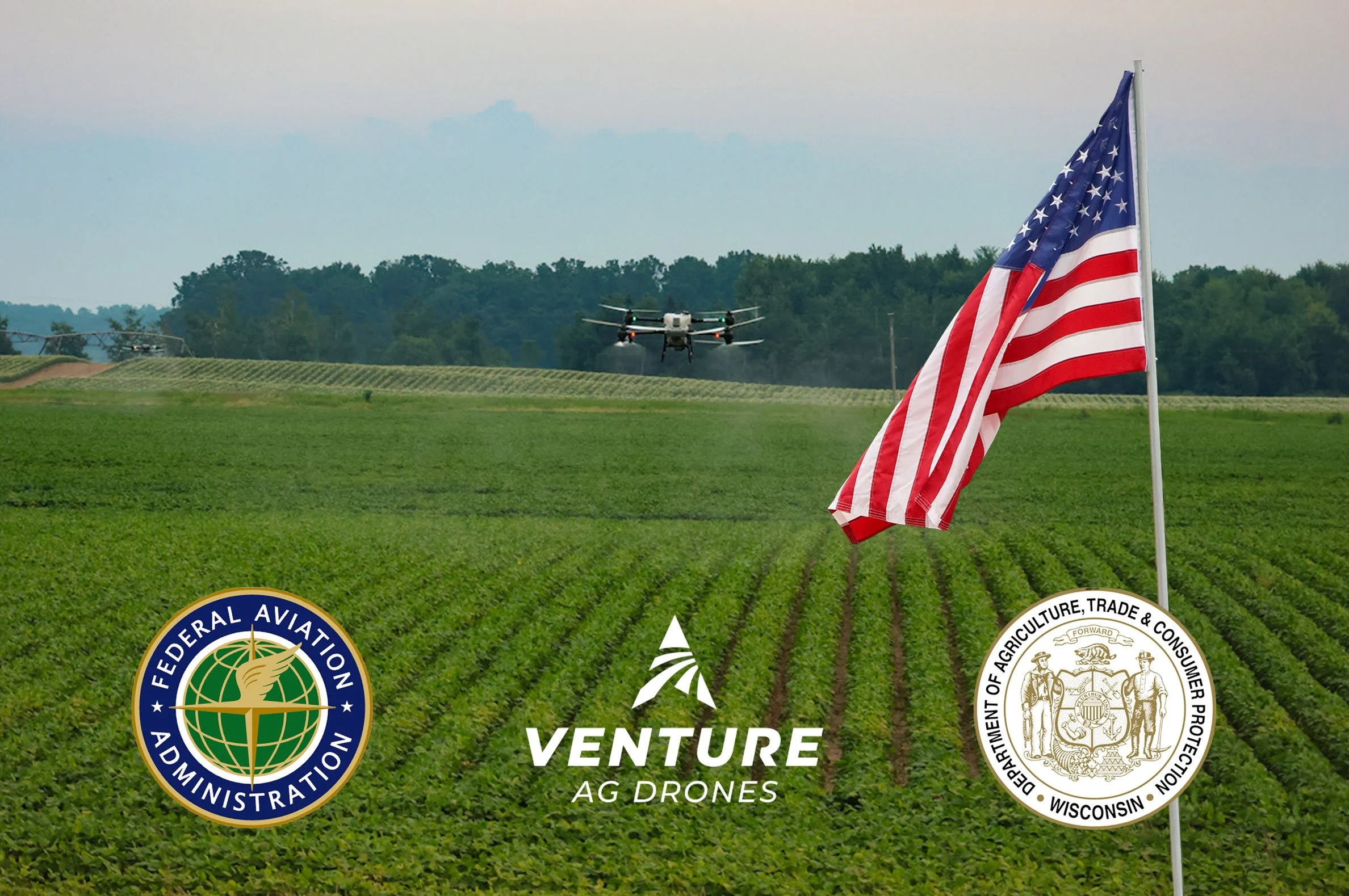
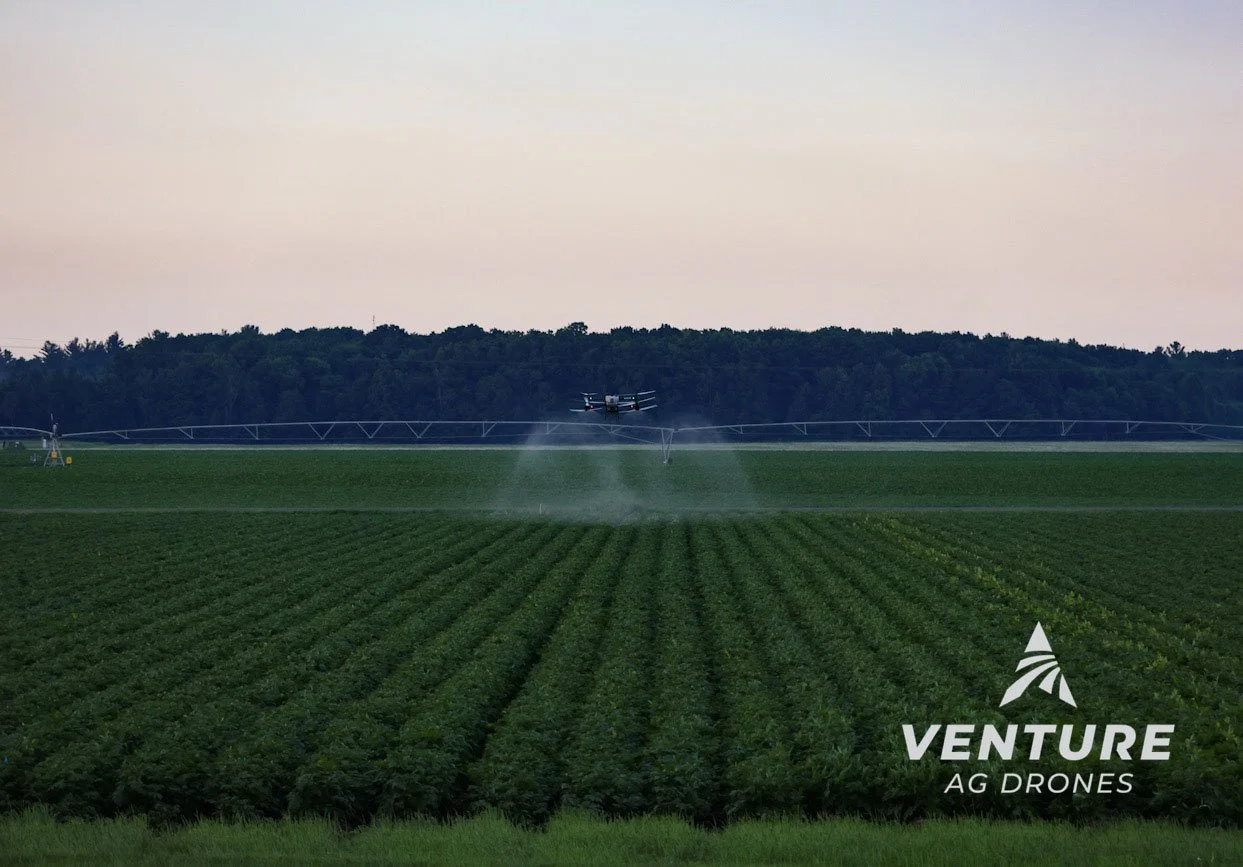
The sight of a spray drone over our fields is becoming an increasingly common sight in modern agriculture. Between precision applications and reaching the terrain that ground rigs just can’t touch, the advantages are undeniable. But as with any powerful tool, it comes with responsibilities. At Venture Ag Drones, we're not just about cutting-edge technology; we're about compliant, safe, and effective application that protects your farm and your livelihood.
You might be considering hiring a drone applicator or even flying one yourself. Before you do, it’s crucial to understand the intricate web of regulations that govern these operations. Ignoring them isn't just a minor oversight; it can have significant legal and financial consequences for your property and your business.
If you’re considering hiring an applicator or flying your own, there are three things you need to know to protect your property and your pocketbook.
1. The High Bar for Professional Certification
Becoming a legitimate aerial drone applicator isn’t a weekend hobby. We know the red tape because we’ve been through it:
FAA Remote Pilot Certificate (Part 107): Every agriculture drone operator must pass an aeronautical knowledge exam to earn their "Part 107" certificate from the Federal Aviation Administration (FAA). This ensures they understand airspace regulations, weather impacts, and safe operational procedures.
Medical Certificate: If an agriculture drone pilot wants to fly manually or operate at night, the FAA requires a Class 3 Medical Certificate. This involves a physical exam by an FAA-designated Aviation Medical Examiner to ensure the pilot has the vision and health to safely manage a heavy aircraft in the NAS (National Airspace System).
FAA Part 137 Agricultural Aircraft Operator Certificate: This specialized FAA certificate specifically addresses the unique safety and environmental considerations of dispensing chemicals and agricultural products from a drone.
Section 44807 Exemptions: When flying drones over 55 pounds, specific exemptions from FAA regulations are required. These are not automatically granted and involve detailed and lengthy applications. This also involves pre-flight NOTAM filing and monthly post-flight reporting.
FAA Drone Registration: All drones must be registered with the FAA. For drones over 55 pounds, you obtain an N-number just like the ones assigned to manned aircraft.
State-Specific Pesticide Applicator Licensing: The governing entity in Wisconsin is the Department of Agriculture, Trade and Consumer Protection (DATCP) for both private and commercial applicators.
Commercial/Public Applicator: If you're applying pesticides for others, or on public/institutional lands, you'll need to be certified as a commercial applicator, including in the "Aerial Applicator" subcategory. This also typically requires a commercial business license.
Private Applicator: If you're applying restricted-use pesticides on your own or employer's land for agricultural commodity production, you'll still need a private and aerial applicator certification.
Spring 2026 Update:
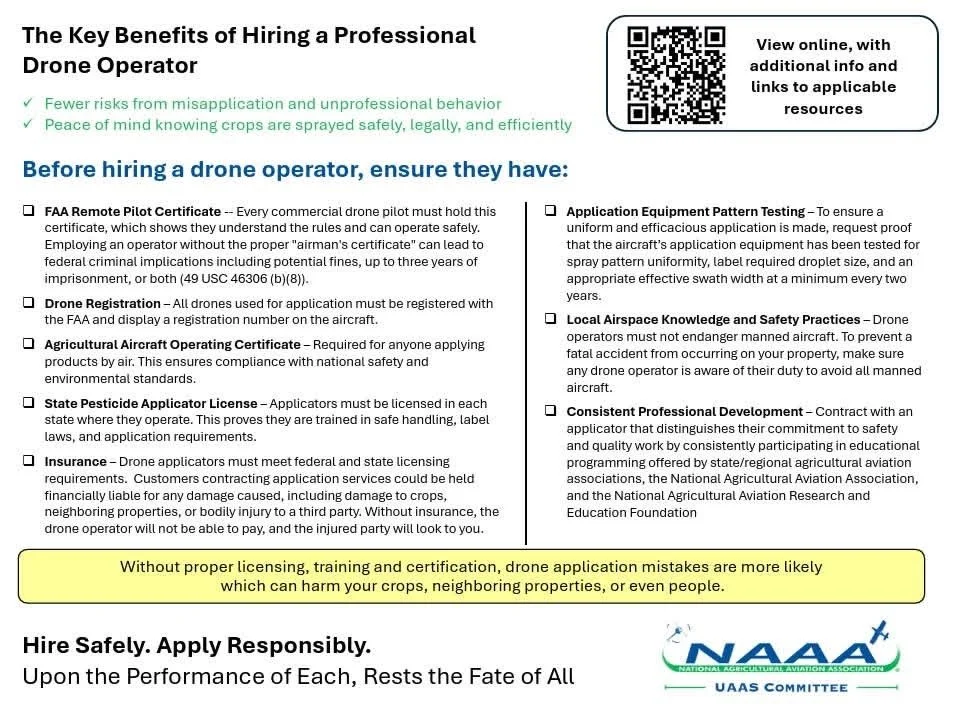
The National Agricultural Aviation Association just released their own checklist safety card resource. We’ve included and image of it below. You may also find this resource online by scanning the QR code or by clicking here.
2. Your Farm, Your Liability
Why should a farmer care if their pilot is "by the book"? Because if you hire a non-compliant pilot, you share the liability.
If an uncertified pilot causes a chemical drift issue, hits a power line, or has a mid-air collision, regulatory agencies and insurance companies look at the entire operation. Additionally, many insurance policies have "illegal acts" AND “aircraft” exclusions, meaning if you hire a pilot who lacks the proper credentials, your insurance may deny the claim. You could be left paying for crop damage or property repairs out of your own pocket.
Example insurance exclusions include:
Pollution Liability Coverage
“This coverage does not apply to bodily injury or property damage arising out of owning, maintaining, using, or entrusting to others any aircraft.”
Unmanned Aircraft Liability Coverage
“…we do not cover bodily injury, property damage, or personal injury arising out of the discharge or release of any substance from any unmanned aircraft.”
3. "My Land, My Rules" Doesn't Apply
A common misconception is that if you own the land and fly the drone yourself, you can skip the red tape. This is false. Even if you are a private person on private property, the FAA still considers a spray drone an aircraft in the National Airspace. To fly a spray drone on your own farm, you must still:
Obtain your FAA Part 107 license.
Pass the 3rd ClassMedical Certificate (if flying manual and/or at night).
Obtain and comply with a 44807 Exemption from the FAA (including pre-flight NOTAM filing and monthly post flight reporting).
Obtain and comply with FAA Part 137 regulations.
Register the aircraft (N-number).
Hold a Private Pesticide Applicator license from the state for applying restricted use pesticides.
The only "shortcut" for a private farmer is at the state level. You take a private applicator test rather than a commercial one. Every other federal safety and medical requirement remains the same.
Partner with Confidence
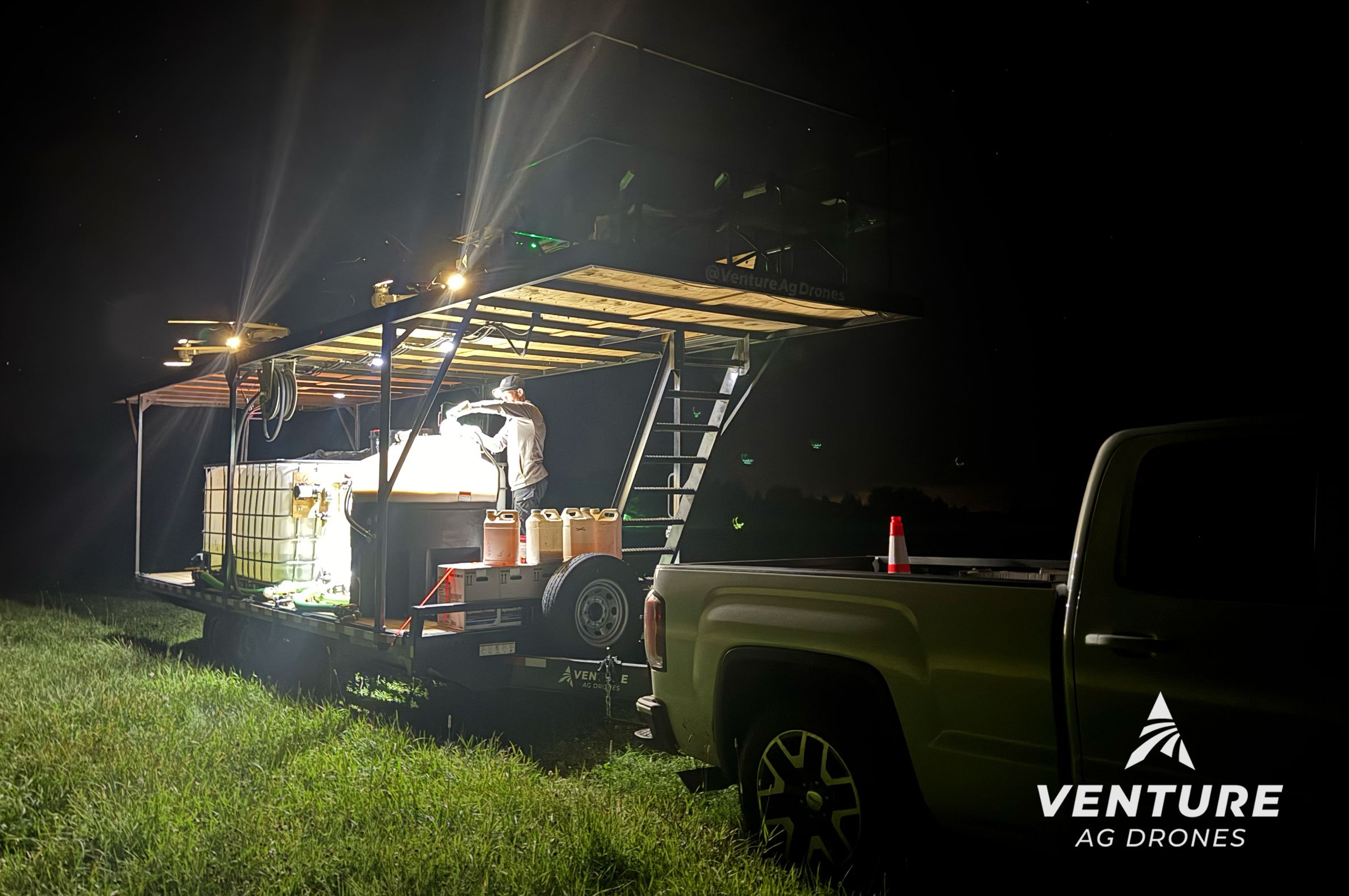
Don't risk your harvest or your legacy on a pilot who cuts corners. Venture Ag Drones is fully compliant, medically cleared, and insured to provide the high-standard service your farm deserves.
About Venture Ag Drones
Venture Ag Drones provides custom aerial application in Central Wisconsin including drone spraying and spreading. From row crop to specialty applications, our experience is wide ranging from corn fungicide, potato desiccation, Christmas tree insecticide, greenhouse shade painting, alfalfa new seeding and so much more. Based in Antigo, Wisconsin, we’re here to become your trusted partner in this new age of agriculture technology. Connect with us today using our contact page.